OpenAI's Jalapeño Chip Shows That Inference Is Becoming Product Strategy
Training builds the model. Inference builds the business. That is the thought I kept coming back to when OpenAI and Broadcom announced Jalapeño, OpenAI's first custom Intelligence Processor designed for LLM inference.

For the last few years, most of the AI conversation has been centered around model capability. Which model is smarter? Which model has better reasoning? Which model performs better on coding, math, multimodal understanding, or long-context tasks? Those questions still matter. But as AI moves from impressive demos into daily products, another layer is becoming just as important: how efficiently, reliably, securely, and affordably these models can be served to millions of users.
That is where inference matters.
Every ChatGPT response, every Codex task, every API call, every enterprise workflow, and every future AI agent depends on inference. Training creates the intelligence. Inference delivers it to users. If inference is too expensive, too slow, too unreliable, or too hard to govern, the product experience breaks.
That is why Jalapeño feels bigger than a chip announcement. It is a signal that the AI race is moving from model quality alone toward full-stack infrastructure control.
Why this caught my attention
During my MBA, Vijay Nagarajan, a VP of Strategy and Marketing at Broadcom, joined one of our marketing classes for a fireside chat. I remember coming away with a stronger appreciation for something that is easy to ignore as a software person: so much of modern technology depends on invisible infrastructure.

Chips. Networking. Connectivity. Data movement. Enterprise deployment. All the things users rarely see, but every product depends on.
I later started noticing similar themes in his ConnectingAI newsletter, which often curates stories around AI infrastructure and the hardware layer behind intelligence. One recent issue highlighted a Network World article about AI inference moving to private clouds. The argument was simple but important: as enterprises move AI from experiments to production, they start caring much more about security, governance, cost predictability, performance, privacy, and control. That made the OpenAI and Broadcom Jalapeño announcement feel less like an isolated chip launch and more like part of a bigger shift.
AI is no longer just a model race. It is becoming an infrastructure race.
What Jalapeño actually is
Jalapeño is OpenAI's first custom Intelligence Processor, built with Broadcom and designed specifically for LLM inference. That distinction matters because this is not being framed primarily as a training chip. It is being framed around the part of AI that users experience every day: serving model outputs at scale.
OpenAI says the chip was designed using its understanding of its own models, kernels, serving systems, and product needs across ChatGPT, Codex, the API, and future agentic products. That is important because OpenAI is not guessing what inference workloads look like in theory. It sees those workloads every day at massive scale.
The most interesting technical idea is not just raw compute. It is data movement. A lot of AI infrastructure is not limited only by how much computation is available. It is limited by how efficiently data can move between memory, accelerators, networks, racks, and systems. For large language models, especially at scale, the product experience depends on how well the system balances compute, memory, networking, latency, throughput, and power.
The user sees a fast answer. Underneath that answer is an infrastructure problem.
Inference is where AI becomes a product
Training is glamorous because it creates the model. Inference is less glamorous, but it is where the business happens. A trained model sitting in a data center is potential. A model answering questions, writing code, analyzing documents, helping employees, powering agents, and supporting enterprise workflows is a product.
That means inference cost becomes product cost. If inference is expensive, companies respond with usage limits, premium tiers, slower access, smaller context windows, model routing, throttling, and tradeoffs between quality and price. Product managers feel this directly. You may want to build a magical experience, but the unit economics may not allow it.
This becomes even more important with agents. A chatbot may make one model call. An agentic workflow may make many. It may plan, call tools, inspect results, retry, verify, summarize, and continue. One user request can become a chain of model calls underneath the surface.
That changes the economics of AI products.
If agents are going to become mainstream, inference has to become cheaper, faster, more reliable, and easier to scale. Otherwise, agentic products risk staying impressive in demos but expensive in production. Jalapeño is OpenAI's attempt to optimize the layer where these product realities show up.
The Stargate connection
This is where OpenAI's broader infrastructure strategy becomes interesting. Stargate is OpenAI's long-term AI infrastructure platform, and OpenAI's partnership with Oracle adds massive data-center capacity to that vision. Today, we should be careful. OpenAI has said early capacity in Abilene is using NVIDIA GB200 racks, so Jalapeño is not confirmed to be powering Stargate today. But the direction is hard to miss.
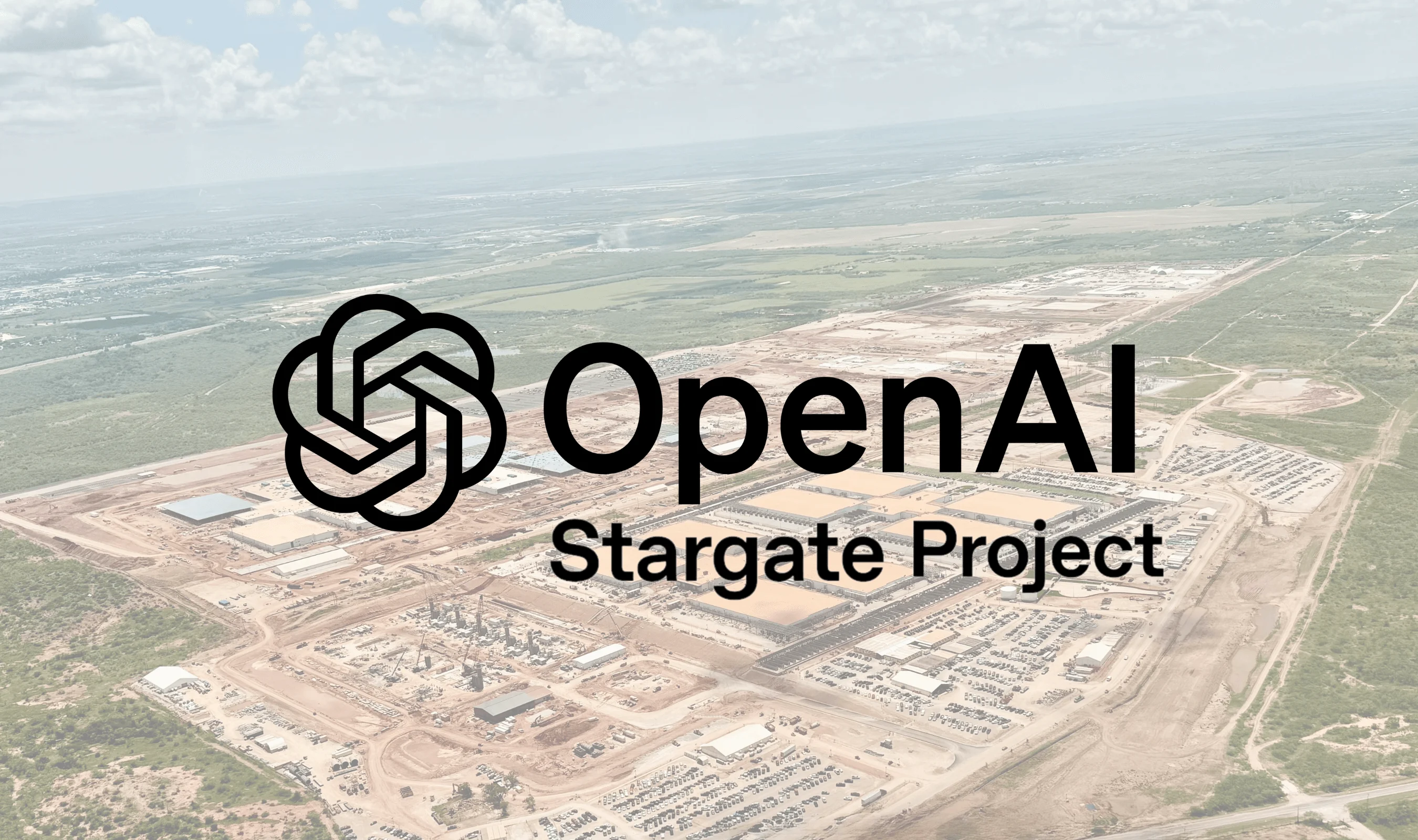
Stargate gives OpenAI the capacity layer. Jalapeño gives OpenAI a path toward custom inference economics inside that kind of capacity. Even if Jalapeño is not the first engine of Stargate, it feels like a step toward the vertically integrated AI infrastructure OpenAI wants to build. That is the bigger story. OpenAI is not just trying to build better models. It is trying to control more of the stack that turns those models into products: the data centers, the networking, the chips, the serving systems, the developer platform, and the user-facing applications.
In consumer AI, that may mean faster ChatGPT responses and better access during high demand. In developer tools, it may mean Codex can take more steps, run longer workflows, and become more useful. In enterprise, government, and security use cases, it may mean more predictable cost, reliability, deployment options, and stronger trust boundaries.
The enterprise and security angle
The private-cloud inference trend is important because it shows what enterprises actually care about once AI becomes operational. In the experimentation phase, companies may use whatever is easiest. But once AI starts touching real customer data, internal systems, regulated workflows, codebases, security operations, or government use cases, the conversation changes.
The questions become:
- Where does the data go?
- Who controls the infrastructure?
- Can usage be governed?
- Can costs be predicted?
- Can the system meet latency and reliability expectations?
- Can it support security and compliance needs?
This is why OpenAI's public-sector and cybersecurity work matters to the Jalapeño story. OpenAI has been building government-facing initiatives and has also launched Daybreak, a cybersecurity effort that includes GPT-5.5-Cyber and Codex Security for authorized defensive workflows.
That makes inference infrastructure more than an efficiency story. If AI models are going to support enterprises, governments, security teams, and critical infrastructure, then the infrastructure underneath them has to be trusted, scalable, governed, and cost-effective.
In that world, chip strategy becomes go-to-market strategy.
The competitive landscape
OpenAI is not alone in realizing this. Google has spent years building its TPU stack, with Ironwood positioned for the age of inference. NVIDIA is moving beyond GPUs into the full AI factory: compute, networking, memory, software, and systems. Amazon has Trainium, and Anthropic has committed deeply to AWS infrastructure to train and run Claude at massive scale. Microsoft has Maia 200, an inference accelerator designed to improve the economics of token generation inside Azure, Copilot, and its AI platforms.
So OpenAI's Jalapeño is part of a broader industry pattern. The companies closest to AI demand are trying to control more of the hardware and infrastructure underneath that demand. But OpenAI's position is unique.
Google, Amazon, and Microsoft are hyperscalers. NVIDIA is the dominant AI infrastructure platform. OpenAI is a model and product company with enormous direct demand from ChatGPT, Codex, API customers, developers, enterprises, and future agents. That demand may be large and specific enough to justify custom silicon designed around OpenAI's own serving patterns. In other words, Jalapeño is not just OpenAI trying to copy a hyperscaler. It is OpenAI realizing that its product scale may require hyperscaler-like infrastructure control.
Anthropic is the interesting contrast
Anthropic has frontier models and major infrastructure partnerships. It runs across AWS, Google Cloud, Microsoft Azure, and other environments. It has also made a massive compute commitment to AWS and Amazon's Trainium roadmap. But Anthropic has not announced a custom chip of its own. That does not make Anthropic weak. In fact, its strategy may give it flexibility. It can use different chips, clouds, and partners depending on workload, geography, customer needs, and cost. But recent events around Fable 5 and Mythos 5 also show that frontier AI companies are exposed to more than benchmark competition. They are exposed to compute supply, cloud partnerships, policy risk, export controls, sovereignty, and access restrictions.
That is why Jalapeño makes OpenAI's strategy more interesting. OpenAI may not be ahead simply because it has a chip. Early performance claims still need independent validation, and NVIDIA, Google, Amazon, and Microsoft all have serious infrastructure advantages. But OpenAI may be trying to edge ahead in a different way: by owning more of the stack that connects intelligence to real-world products.
The product strategy lesson
The AI race is changing. For a while, the center of gravity was model intelligence. That still matters, but intelligence alone is not enough. The next phase will also depend on who can serve that intelligence cheaply, reliably, securely, and globally. That is a product strategy problem. A PM building an AI product does not only care whether a model is smart. They care whether users can access it quickly, whether the feature can scale, whether the cost makes sense, whether latency is acceptable, whether enterprises can trust it, and whether the experience works during peak demand.
At small scale, these look like engineering details. At OpenAI scale, they become strategic advantages.
Jalapeño matters because it shows OpenAI treating inference as a core product layer, not just a backend cost center. The chip itself may or may not become the definitive AI accelerator of this era. It is too early to know. But the strategic signal is clear. The model, the product, the serving system, the data center, the network, and the chip are no longer separate decisions. They are becoming one integrated stack. And in that stack, inference may be where the next phase of AI competition is won.
If you are exploring how AI infrastructure is changing product strategy, I would love to connect and continue the conversation.