The New Interface to AI
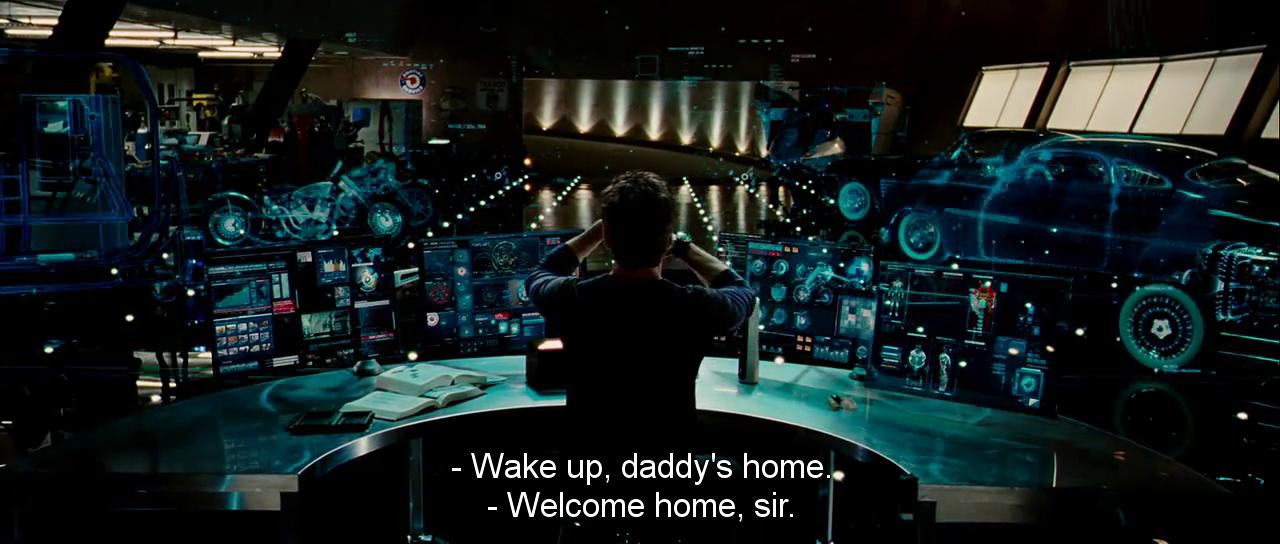
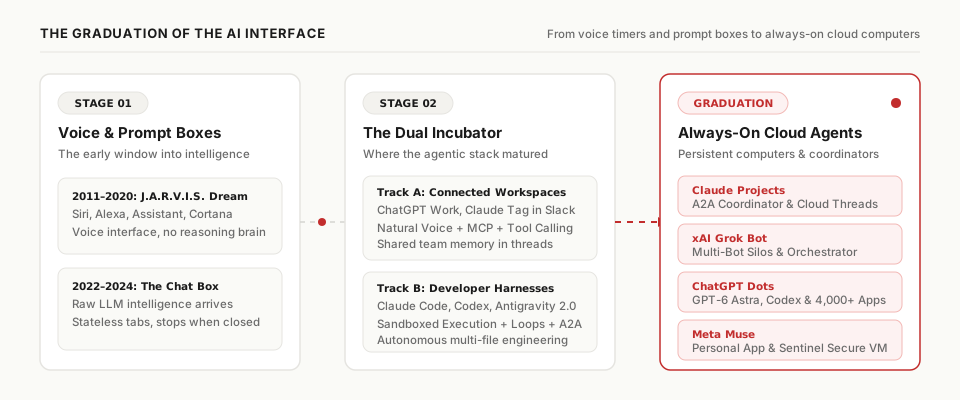
Over a decade ago, when Siri, Alexa, Google Assistant, and Cortana first arrived in our living rooms and pockets, the entire tech industry shared a single cultural obsession: J.A.R.V.I.S. from Iron Man. We wanted a personal, ambient system that knew our context, worked quietly in the background, and coordinated complex tasks across our lives and businesses. Those early assistants captured the right imagination, but the underlying intelligence simply did not exist yet, leaving us with glorified voice timers that struggled to remember what we had asked thirty seconds earlier. When large language models finally delivered the brain a few years ago, we had to evolve our interfaces step by step. Starting with a blank, turn-by-turn chat box was a necessary first stage: we needed a direct window to talk to raw intelligence and figure out what these models could actually do.
Over the last couple of years, however, the industry outgrew the isolated prompt box along two parallel tracks. Inside the chat window itself, the experience matured from basic text Q&A into connected workspaces like ChatGPT Work and multiplayer team channels like Claude Tag, where an entire Slack channel can mention @Claude to investigate a production incident or pull metrics with shared channel memory. Models got dramatically smarter at long-horizon reasoning, voice models became fast and natural enough to hold real conversations, and the ecosystem standardized around tool calling and the Model Context Protocol (MCP). At the exact same time, an even more aggressive evolution was happening inside software engineering. Developers moved from copy-pasting code out of browser tabs, to AI-assisted IDEs, to terminal CLIs, and finally into full agentic harnesses like Claude Code, Codex, Cursor, and Antigravity 2.0, where agents gained persistent file systems, sandboxed code execution, background loops, and Agent-to-Agent (A2A) communication.
What we are witnessing over the past few weeks with Claude Projects, xAI's Grok Bot, OpenAI's ChatGPT Dots, and Meta's Muse is a graduation. The primitives that were battle-tested inside developer terminals and connected workspaces have broken out of the prompt box to become the new everyday interface to AI. Look beneath the surface of all four releases and you find that every major lab has converged on the exact same architectural blueprint: give the user a persistent Linux cloud computer (or a fleet of cloud sessions), let agents run in the background while your laptop is closed, allow specialized agents to coordinate with one another, and pull the human in for direction and approvals rather than manual execution.
Claude Projects: graduating from static folders to an A2A chief of staff

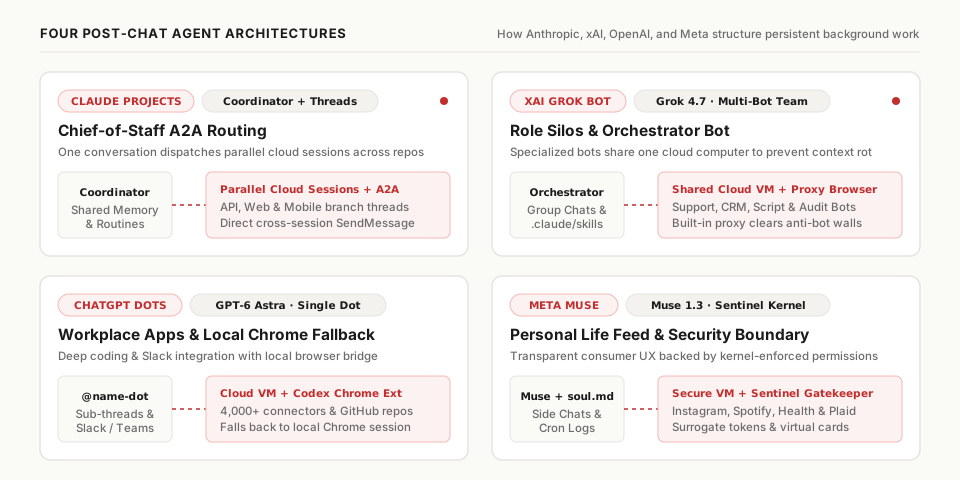
When Anthropic first introduced Claude Projects, a project was essentially a static folder: a place to drop reference PDFs and custom instructions so your isolated chats started with the same background context. You still had to open every session yourself, divide the work manually, and act as a human router copying outputs from one tab into another. Building on Claude Tag (which turned Claude into a shared, channel-aware teammate in Slack) and cross-session messaging in Claude Code (which gave independent sessions ListAgents and SendMessage tools to talk directly to each other), Anthropic's redesigned Claude Projects replaces the static folder with a single, continuous coordinator conversation. Instead of managing individual chats, you brief the project conversation the way you would brief a chief of staff, sending goals, bug reports, or stray thoughts as they occur.
Under the hood, the coordinator decides whether to answer in place, route a request to an existing worker thread, or spin up new parallel cloud threads where each thread is a full Claude Code session working on its own branch in the cloud while your computer is off. If you connect your backend API, web frontend, and mobile repositories and ask the project to retire a deprecated v1 endpoint, the coordinator spawns one thread per repository to migrate the callers, run tests, and open pull requests, and then tells you the exact order those pull requests need to merge so the mobile build does not break against an unmerged API change. Even better, when a backend session finishes a database schema migration, cross-session A2A messaging lets it notify the active frontend session directly ("New column tenant_id is live") without a human copy-pasting terminal logs between windows. Over days and weeks, every thread writes back to a shared project memory and artifact library, remembering why a feature was cut or when a release moved, while scheduled background routines can quietly babysit open pull requests and report back in the main stream.
xAI's Grok Bot: multi-bot role silos that prevent context rot
While Claude Projects grew out of multi-repo engineering orchestration, xAI's Grok Bot (powered by Grok 4.7) tackles the broader problem of running continuous business and creative operations without letting your agent lose its mind. Anyone who has tried to make a single long-running agent juggle customer support emails, CRM updates, code fixes, and content research knows what happens next: context rot. As the conversation history balloons across unrelated domains, a single agent starts cutting corners, forgetting instructions, and producing lazy output. Grok Bot solves this by letting you spin up multiple named bots for dedicated roles (such as a Customer Support Bot, a CRM Pipeline Bot, a Script Writer, or a Thumbnail Designer) that all share one persistent cloud computer equipped with a browser, filesystem, and terminal.
Because all of your bots share that single virtual machine, they share authenticated browser sessions, local files, and app logins without polluting each other's conversation context. You can drop multiple specialized bots into a shared group chat or designate an Orchestrator Bot to delegate work across sub-agents autonomously. Grok Bot also makes onboarding remarkably pragmatic: you can walk a bot through a multi-step browser workflow once so it learns the path from demonstration, or directly import existing .claude/skills files (for everything from front-end design standards to headless Blender Python scripts) into a specialized bot. In real-world web tasks like booking travel or checking e-commerce suppliers, Grok Bot's cloud browser uses a built-in proxy configuration that consistently sails past the Cloudflare human-verification walls that block standard cloud Chromium instances.
That combination of role isolation, MCP tool access, and reliable browsing makes Grok Bot a powerhouse for multi-step operations. Put it in charge of an e-commerce back office, for example, and you can have one bot triaging dozens of customer emails and shipping replacements for lost packages, a second bot auditing the backend via MCP to catch and refund hidden double-charges before customers even complain, a third bot logging wholesale leads with discount tiers in HubSpot, and a fourth assigning operational tasks to the right teammates with due dates in Asana. The practical catch is token velocity: while Grok Bot starts at a $20 to $30 monthly base tier, running an active multi-bot fleet burns through base allowances quickly, meaning serious operational workloads realistically belong on the $100/month SuperGrok Plus tier or Cursor Teams plans.
OpenAI's ChatGPT Dots: frontier intelligence meets local browser fallback
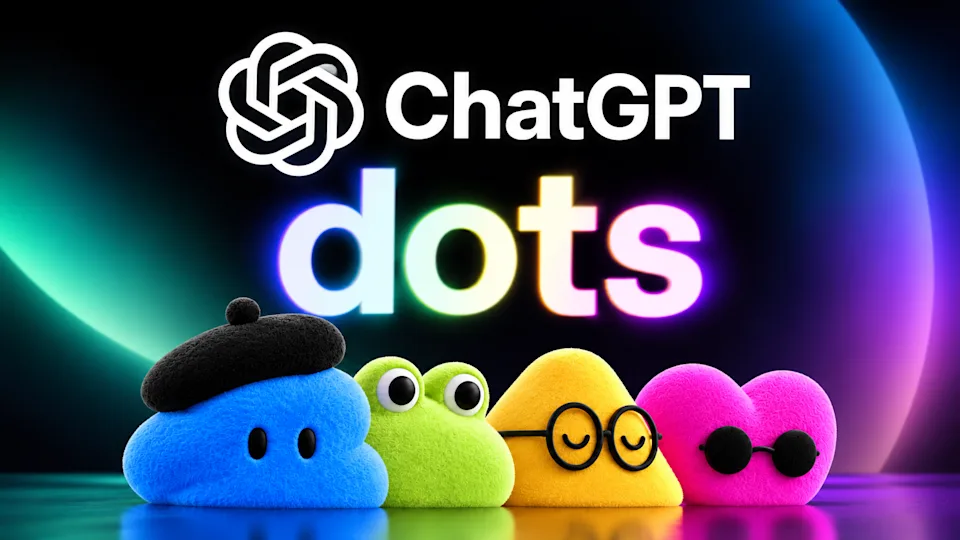
OpenAI's entry into always-on agents, ChatGPT Dots, takes a workplace-first approach anchored by the raw reasoning and coding horsepower of GPT-6 Astra. Available on ChatGPT Pro ($100/month base, with $200 and $500 heavy tiers where chatting with your Dot is free and only background or coding execution counts against limits), a Dot (@yourname-dot) is a persistent agent with its own cloud computer, dedicated browser, and sub-threads that plugs into more than 4,000 workplace connectors across Slack, Microsoft Teams, Gmail, Notion, Linear, and GitHub. Where Dots shines brightest is when a task requires deep code comprehension tied directly to live business state. Because Dots integrates natively with Codex and your GitHub repositories, it can notice a supplier email stating that a bestselling product is out of stock, pause the item in the backend database, and simultaneously push a code update to mark the product badge as "Unavailable" on the live storefront.
OpenAI also engineered a clever escape hatch for one of the biggest headaches in cloud computer-use agents: anti-bot walls. Because every cloud agent runs on a data-center Linux virtual machine, airlines, banks, and strict retail sites frequently block their headless browsers. When a Dot hits a security wall it cannot pass in the cloud, it can fall back to the Codex Chrome Extension, stepping out of its cloud VM to navigate directly inside your local Chrome browser using your real, authenticated desktop session. The main growing pain for Dots right now is not model capability, but interface focus. By folding everyday ChatGPT, ChatGPT Work, and Codex into a single primary Dot with sub-threads rather than isolated multi-agent role silos, the interface can feel crowded, and a single Dot asked to multitask across too many creative and administrative jobs at once is much more prone to rushing its outputs than when it is focused on a well-scoped coding or research thread.
Meta's Muse: personal context, radical transparency, and the Sentinel kernel
While Anthropic, xAI, and OpenAI leaned heavily into software engineering and enterprise workflows, Meta's Muse (powered by Muse 1.3 and Muse Wonder) is unapologetically built to be the best consumer and personal life agent on the market, backed by a generous free tier (up to 100 million tokens per week) alongside a $20/month Power Plan. Open the Muse app on desktop, mobile, or WhatsApp, and it immediately feels less like a chat utility and more like a living personal dashboard. As you talk to it, Muse proactively assembles a personalized daily news feed, surfaces project ideas, and tracks long-term personal goals. It also sets a high bar for agent transparency: at any moment, you can watch its live cloud browser, inspect sub-agent activity logs, review natural-language cron jobs running on a schedule, and directly edit its soul.md personality and memory files so you are never guessing what the system has remembered about you.
Because Meta owns the social graph, Muse's consumer connectors unlock workflows that enterprise agents cannot touch. Connected to Instagram, Spotify, Peloton, Apple Health, and read-only bank feeds via Plaid, Muse can use multimodal vision to scan your saved Instagram bookmarks and assemble a custom fall wardrobe mood board, turn a saved cooking Reel into a categorized grocery checkout cart, or cross-reference your workout recovery data against your calendar. Giving an autonomous agent access to your private accounts, untrusted websites, and payment methods, however, creates what security researchers call the "lethal trifecta" for prompt injection. Meta's answer is the most rigorous sandboxing architecture shipped in consumer AI so far: every user gets an isolated Linux Muse Secure VM, but the Muse agent itself is locked inside an unprivileged container that never sees your real passwords or OAuth tokens. Instead, an external service (hatch-authd) hands the agent fake surrogate tokens, and a separate, kernel-enforced Sentinel agent inspects every connector call and network request (using eBPF data-flow taint tracking) before swapping in the real credential at the network boundary, while online purchases are protected by human checkout approval and single-use virtual cards.
What this unlocks: tiny teams with the reach of an enterprise
Step back from the individual feature checklists and look at how these four systems actually fit together in practice. The real story of this graduation is not that one single agent does everything perfectly; it is that autonomous execution, persistent memory, and multi-agent coordination are now accessible primitives for everyone. A solo founder or a three-person business no longer has to spend their day acting as the human glue between their inbox, their CRM, their task board, and their codebase. You can run a fleet of specialized Grok Bots to handle customer support, proactive refund audits, HubSpot pipeline outreach, and Asana task routing around the clock, delegate multi-repository feature builds and API migrations to Claude Projects or Codex, and let Meta Muse manage your personal schedule, travel research, and daily briefings.
Ten years ago, when we first talked to Siri and Alexa, we thought the missing piece of J.A.R.V.I.S. was simply a smarter voice. As it turned out, we had to build the entire stack piece by piece: frontier reasoning models, low-latency voice, MCP connectors, sandboxed code execution, cross-session A2A messaging, and kernel-level security boundaries. The chat box was where AI learned how to talk to us. With Claude Projects, Grok Bot, ChatGPT Dots, and Meta Muse, AI has finally graduated into a system that can go to work on its own.